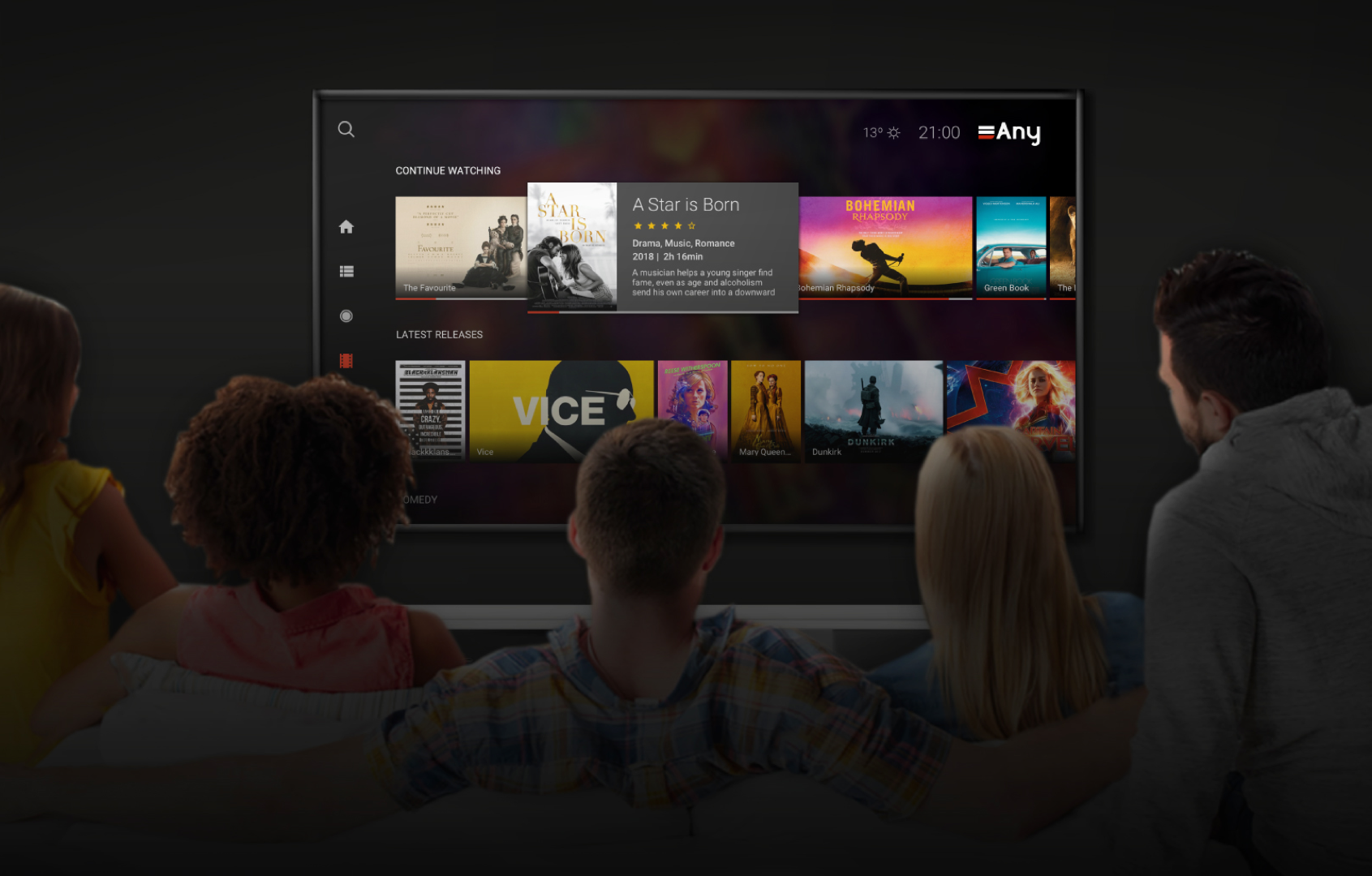
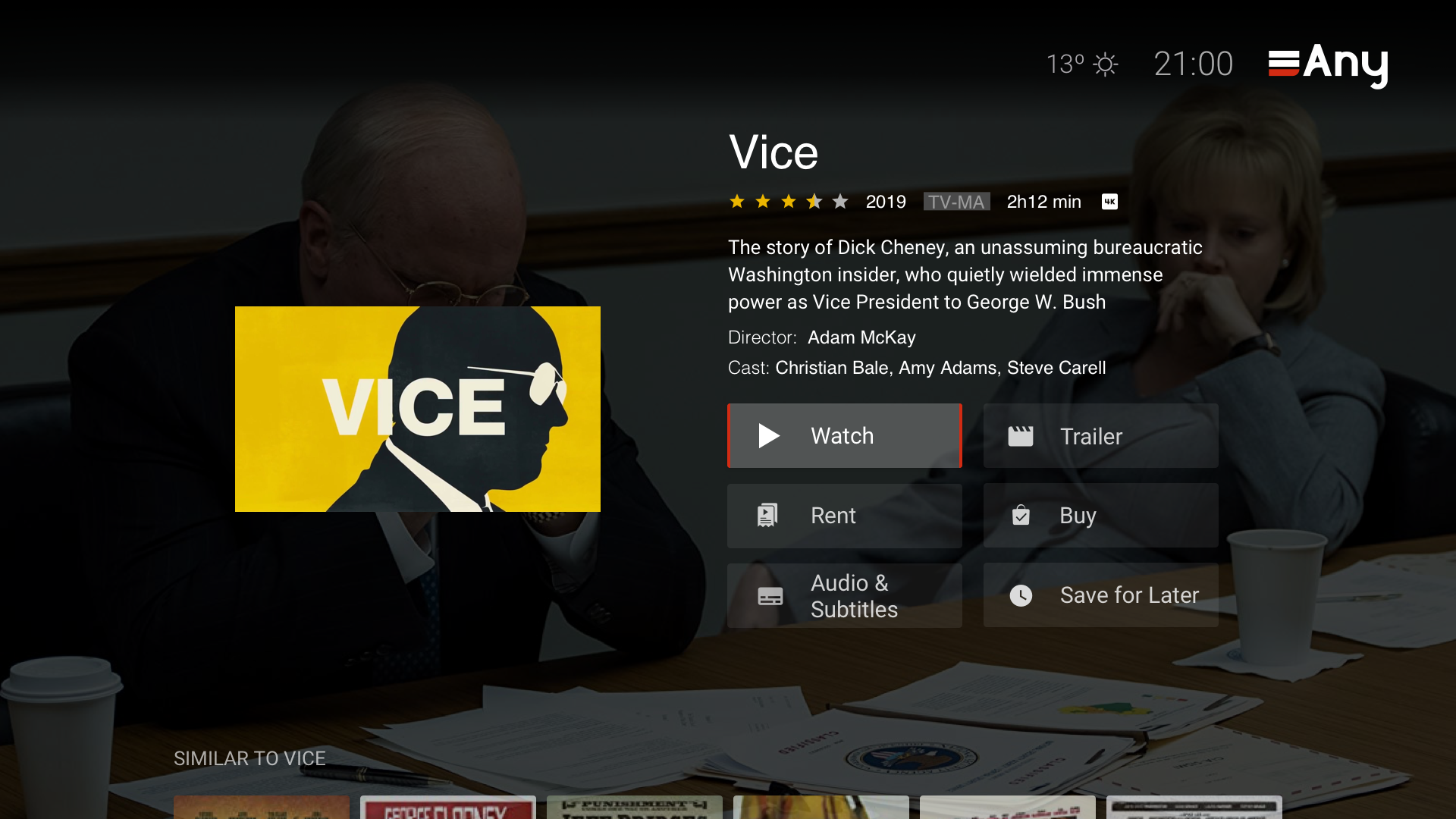
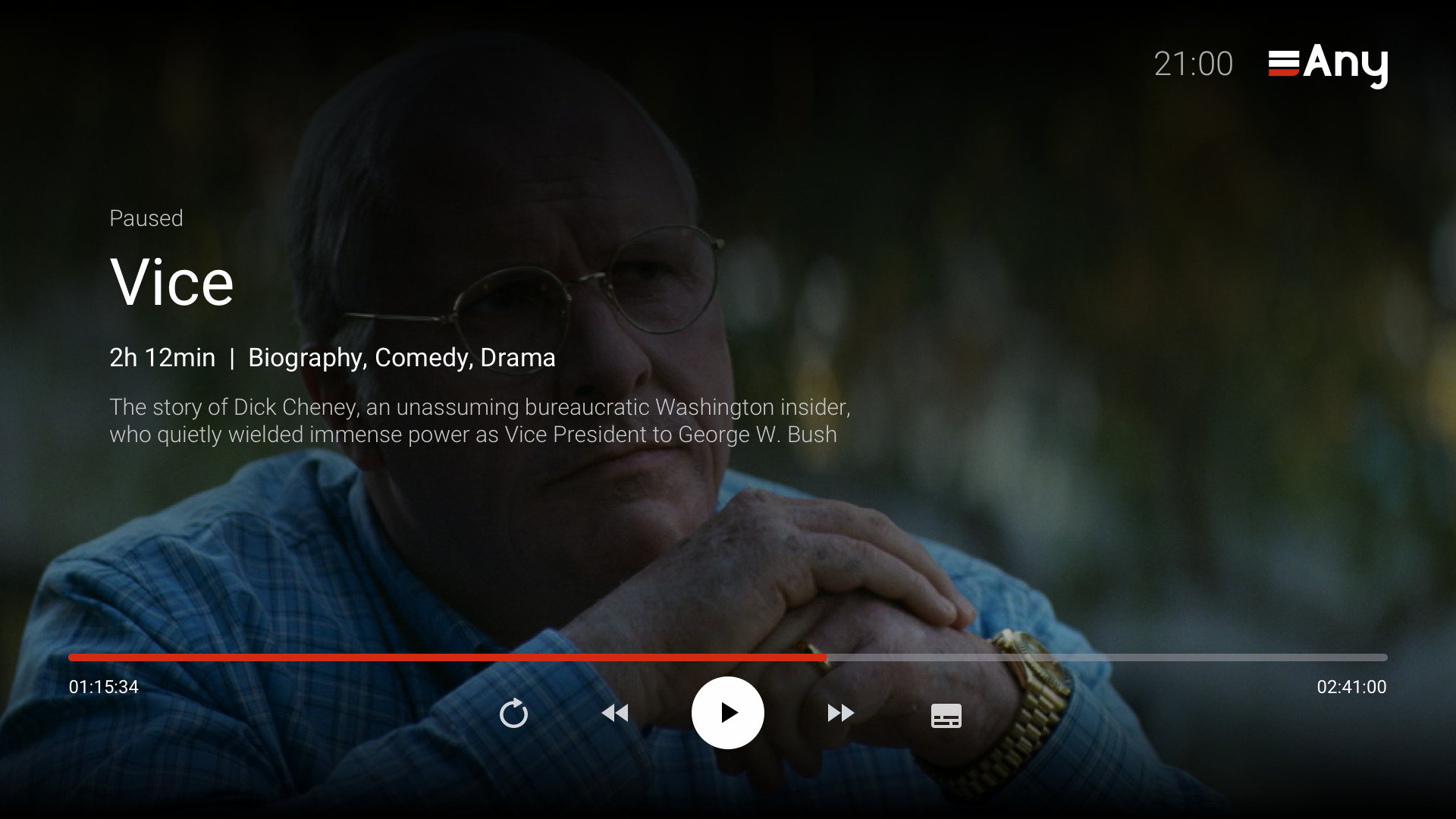
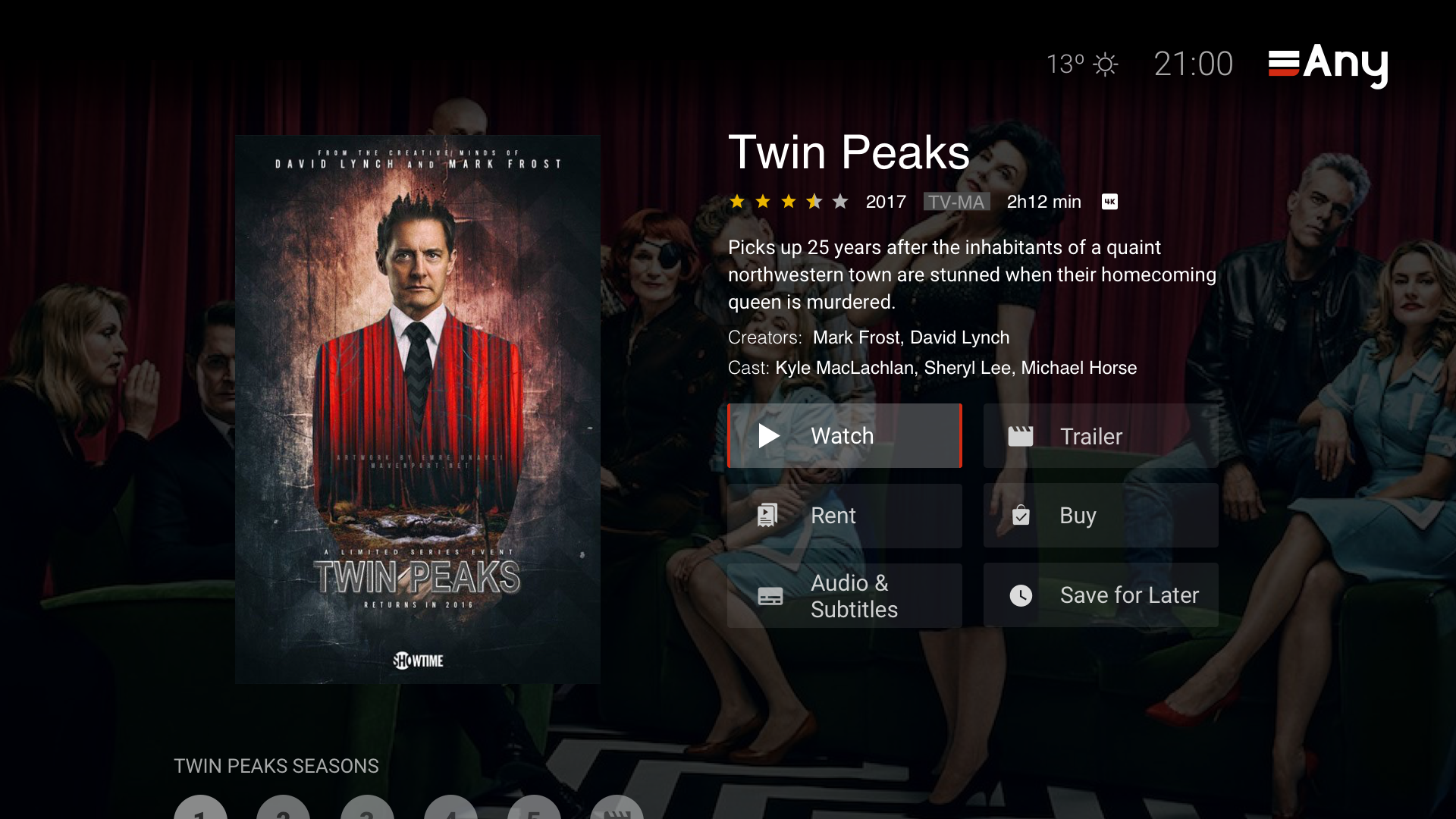
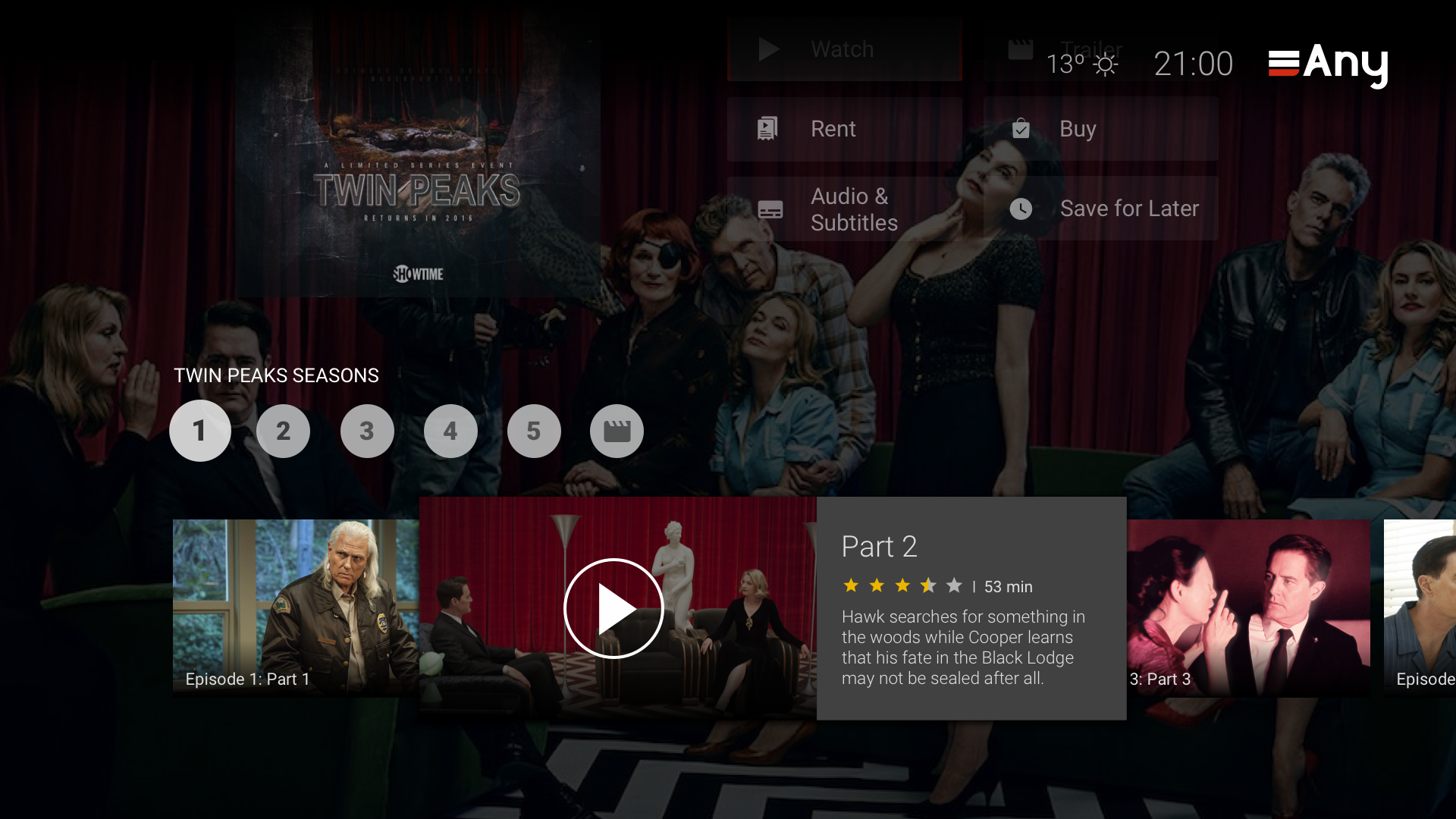
UI Design of a custom Operator Tier launcher built on top of Android TV. The project focused on designing a scalable product interface capable of supporting multiple operators.
Industry
TV Platforms · Streaming · Digital Products
Role
Product UI/UX Designer
Year
2019
Tools
Adobe XD
Zeplin
01
Problem Definition
Any TV is a custom Operator Tier launcher built on top of Android TV. The project focused on designing a scalable product interface capable of supporting multiple operators while maintaining a consistent, intuitive experience across live TV, TV guides, and on-demand content.
Operator Tier launchers operate at the intersection of platform rules, product usability, and business scalability.
Unlike web or mobile products, TV interfaces rely on remote-based navigation, must support long-distance readability, and operate under strict interaction models defined by the platform. At the same time, operators require differentiation and brand presence.
The key product challenge was to design a launcher that:
Scaled across different operators without redesigning core flows
Supported multiple content types with distinct user expectations
Reduced friction in remote-based navigation
Maintained performance, clarity and predictability within Android TV constraints
This positioned the project as a product system design problem, not a screen-by-screen UI exercise.
02
Constraints & Guidelines
Several constraints informed every design decision:
Android TV Operator Tier guidelines defined navigation, focus behaviour and layout logic
TV viewing distance required larger type, spacing and stronger hierarchy
Design trade-offs consistently balanced brand flexibility with system stability, prioritising usability and product coherence over purely aesthetic variation.
03
Strategy & Decision-Making Criteria
Design decisions were guided by three core product principles:
Content-Driven Structure
The launcher was structured around how users naturally consume TV content. Each content type — live TV, guide and on-demand — was treated as a distinct product flow with its own interaction logic.
Navigation Predictability
Remote-based interaction requires consistency. Focus states, movement patterns and spatial relationships were standardised to reduce cognitive load and learning time.
System Adaptability The UI was designed as a modular system, enabling visual customisation for different operators without compromising interaction logic or usability standards.
These principles ensured the product remained scalable, maintainable and user-centred.
04
Process
The project followed an iterative, product-oriented workflow with continuous design–development collaboration.
Discovery & Platform Understanding
An in-depth analysis of the brand’s journey, values, and audience relationship established the foundations for the new visual direction.
System Definition
Core layouts and interaction patterns were defined early to establish a stable foundation for navigation, focus behaviour and hierarchy.
Iteration & Validation
Design decisions were validated through implementation on real devices, allowing refinements to typography, spacing and focus behaviour based on real usage conditions.
Cross-Functional Collaboration
Design and development evolved together. Constraints surfaced during implementation informed design refinements, ensuring the final product remained technically feasible and performant.
05
UI & Interaction Design
Home Screen
Designed as the primary discovery surface, the home screen prioritises content visibility, clear hierarchy and fast access to key sections.
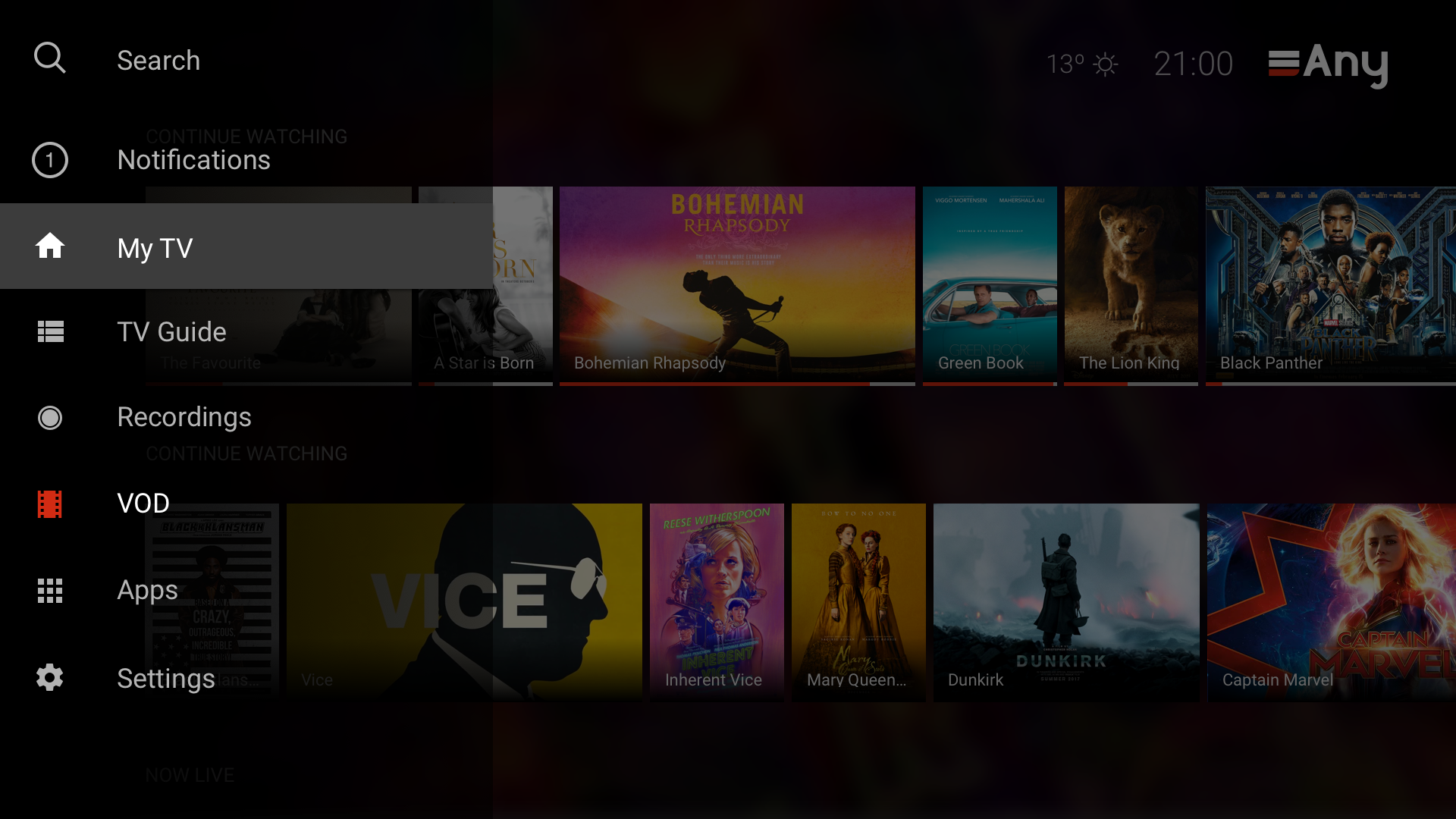
Navigation & Menu System
The navigation system supports predictable movement across the product, reinforcing orientation and reducing friction during repeated use.
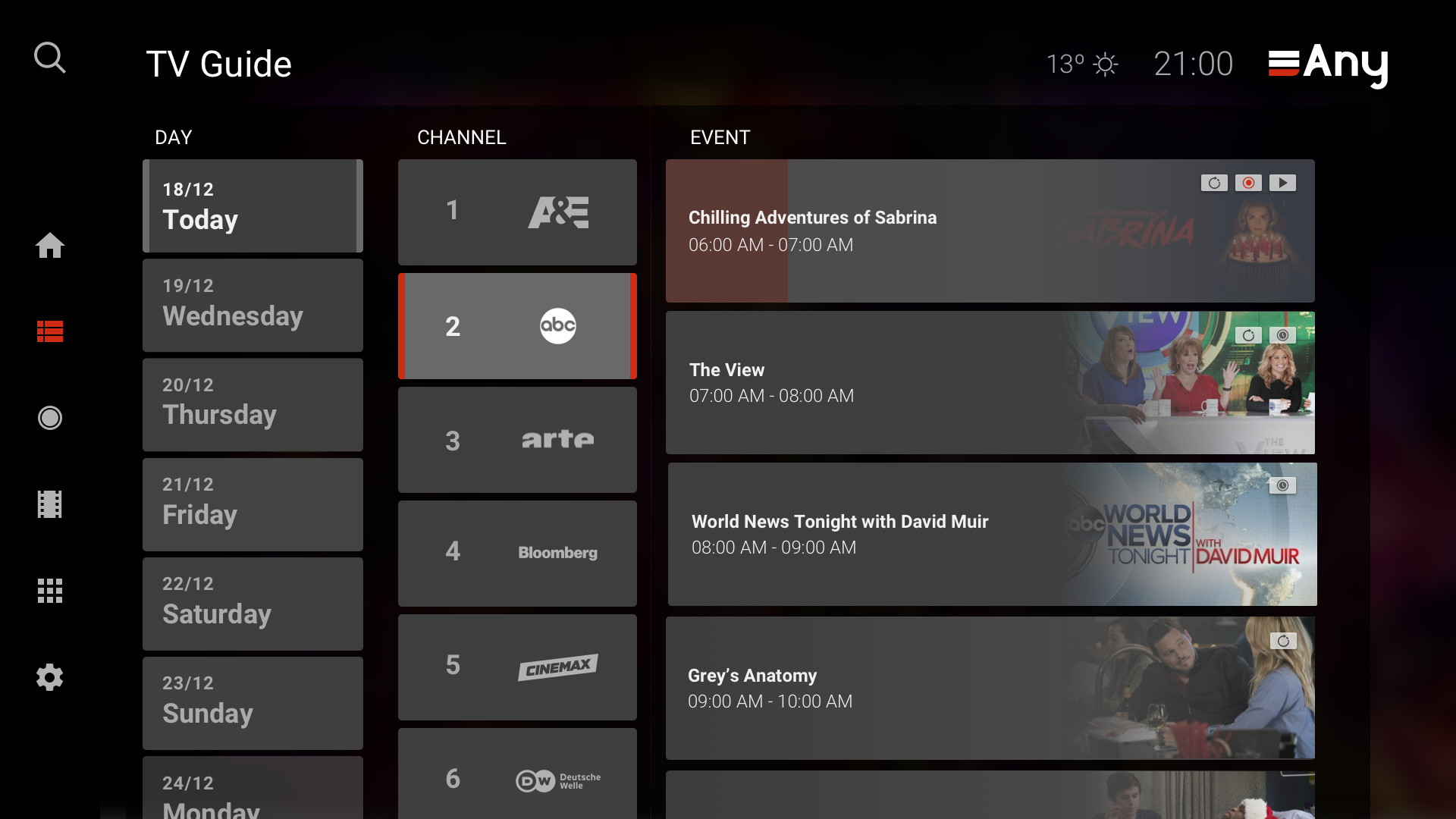
TV Guide (EPG)
The EPG prioritises information density without sacrificing readability, enabling users to scan schedules efficiently and transition smoothly into content.
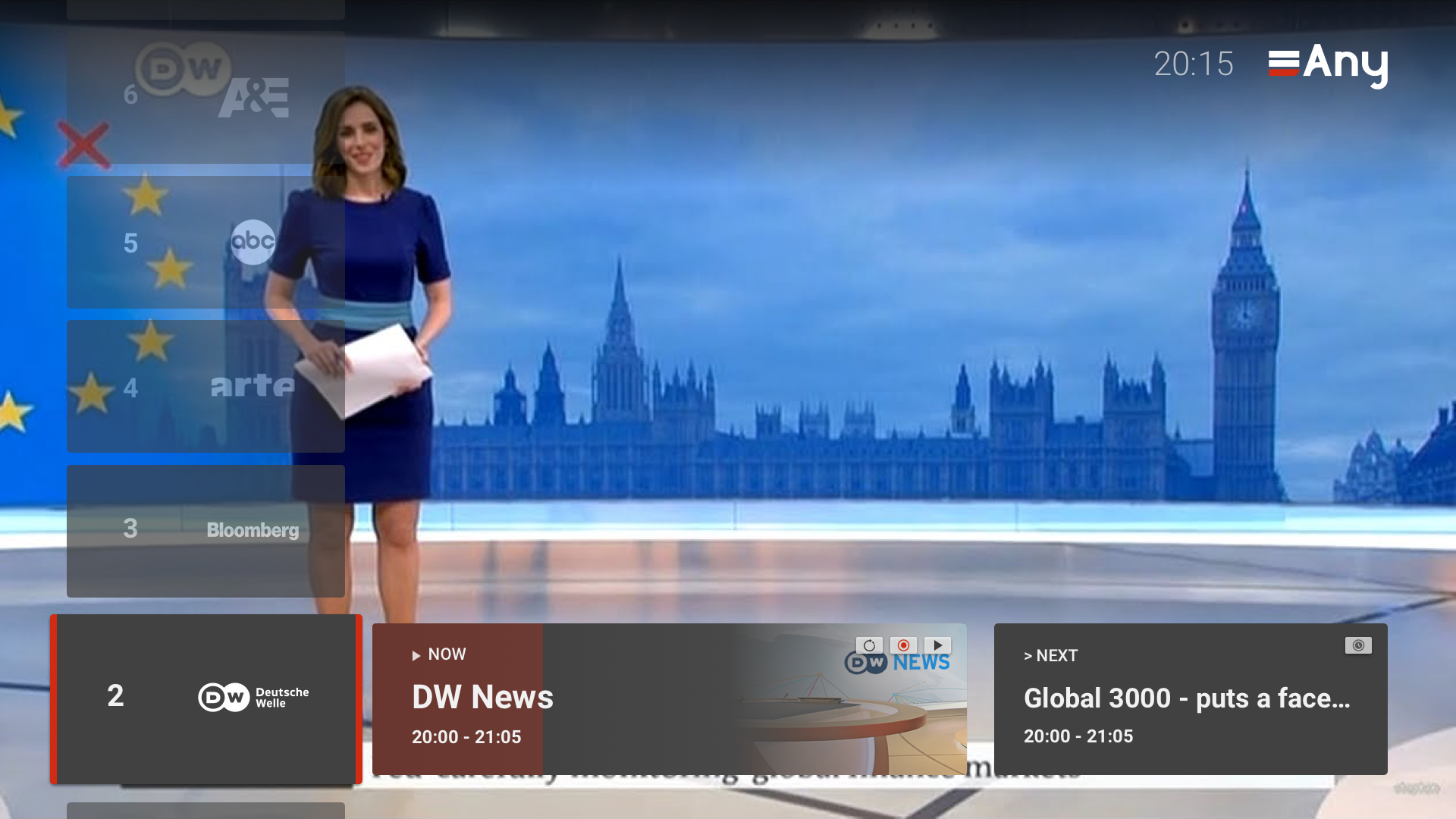
Linear TV & Channel Zapping
Interaction patterns ensure continuity and spatial consistency, helping users maintain context while switching channels.
On-Demand Content
Browsing patterns were optimised for remote interaction, balancing visual density with selection clarity.
06
Platform & Usability Considerations
TV product design introduces constraints that directly shape usability:
Focus-based interaction replaces direct manipulation
Visual hierarchy must support distance viewing
Motion and transitions reinforce orientation, not decoration
All UI components were designed with these constraints in mind, ensuring comfort, clarity and consistency over extended viewing sessions.
7
Key Outcomes
PRODUCT IMPACT
A reusable Operator Tier launcher system adaptable to multiple operators
Consistent interaction patterns across diverse content types
A UI framework aligned with Android TV standards while allowing brand differentiation
DESIGN VALUE The project demonstrated the importance of system thinking and interaction consistency when designing products within platform-restricted environments.
8
Reflections
This project reinforced that TV interfaces function as long-term products, not static designs.
Success depended on disciplined decision-making, deep understanding of platform constraints, and close collaboration with engineering. Designing for Android TV highlighted how strong product foundations — structure, consistency and usability — create experiences that scale beyond a single client or brand.